
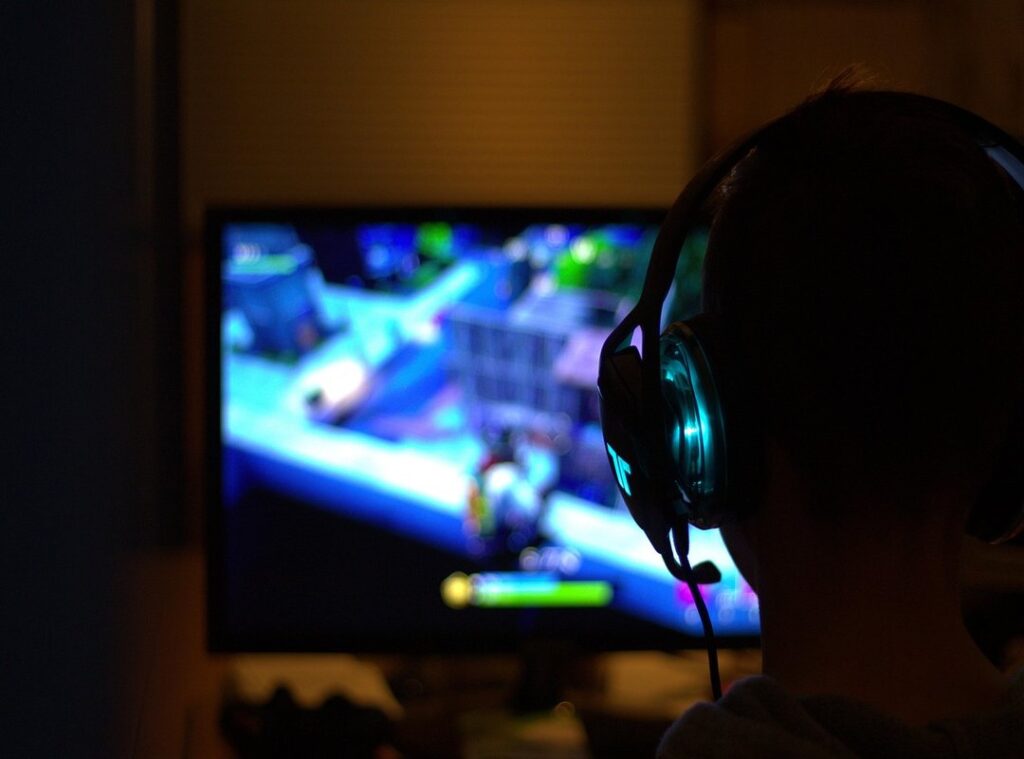
Your thumb slips on the controller.
Again.
You’re three seconds from winning and your headset cuts out. Your mouse feels like it’s dragging through syrup. Your keyboard keys stick mid-combo.
Sound familiar?
I’ve been there. More times than I care to count.
Most gamers spend thousands on rigs but treat accessories like afterthoughts. That’s backwards. Your gear doesn’t just connect to the game (it) is the game.
I’ve tested over 200 digital gaming accessories. Real sessions. Not lab benches.
Not press demos. Actual ranked matches. Late-night raids.
Tournaments where lag costs you placement.
Some worked. Most didn’t.
A lot of what’s sold as “pro-grade” is just rebranded plastic with a higher price tag.
This guide cuts through that noise. No fluff. No spec-sheet worship.
Just what actually moves the needle in real play.
You’ll learn how to spot accessories that improve responsiveness, reduce fatigue, and last longer than six months.
Not every upgrade matters. But the right ones do.
And yes. One of them is the Online Gaming Tportstick.
It’s not magic. It’s engineering that respects your time and your reflexes.
What Counts as a Digital Gaming Accessory? (Beyond Mice
A digital gaming accessory does something analog gear can’t: it processes signals, runs firmware, talks to software, and moves data fast.
I’m not talking about foam grips or desk mats. Those are nice. But they’re silent.
They don’t update. They don’t sync.
A mechanical keyboard is digital. It has firmware, polling rates, RGB control, macro layers.
A wrist rest is not. It’s just foam and fabric. (And yes, I’ve seen people argue about this.)
Digital means low-latency protocols, upgradable code, and real-time feedback loops.
That’s why the this guide belongs in this category. It’s not just a USB stick. It reroutes audio, applies hardware DSP on-the-fly, and stays locked to your mic input like a bouncer at a VIP door.
Underrated picks? USB-C audio dongles with built-in DSP. Modular controller faceplates that remap buttons in firmware, not just software.
AI mic monitoring tools that cut background noise before it hits Discord.
Here’s how analog and digital accessories actually differ:
| Accessory Type | Analog Trait | Digital Trait |
|---|---|---|
| Headset | 3.5mm passive signal | USB-C with onboard DAC + latency reporting |
| Mouse | Fixed DPI switch | Onboard memory storing CPI profiles |
| Lighting | Static LED strip | Syncs to in-game events via SDK |
| Mic | XLR cable only | Real-time AI noise suppression at the hardware level |
Online Gaming Tportstick? Yeah. That one counts.
The 5 Metrics That Decide Who Wins (Not) Your DPI
I stopped caring about DPI the day I missed a headshot because my mouse felt slow. (Spoiler: it wasn’t the DPI.)
Input latency is what actually matters. Not polling rate. Not Hz.
Real-world latency. Like 12ms vs. 28ms under load (separates) clean flicks from frustrating lag. TechPowerUp measured that gap across six flagship wireless mice.
You feel it in fast-twitch FPS.
Actuation consistency? That’s how evenly every switch fires. A 15ms variance across left/right clicks wrecks RTS unit selection.
Most brands don’t publish this number. They should.
Firmware updates tell you if the company still cares. If it’s been 14 months since the last patch, assume they’ve moved on. (And yes, that includes some “gaming” brands you’ve heard of.)
Cross-platform compatibility isn’t “works on PS5.” It’s whether button remaps survive a PS5 → PC → Mac jump without resetting. Try it. You’ll see.
Thermal throttling resistance? Real. Sustained 3-hour co-op sessions heat up sensors.
Some mice drift 0.8mm at 40°C. Others stay locked. Input Lag Database tests this.
Not marketing slides.
Where do you find raw data? Go straight to Rtings’ latency graphs. TechPowerUp’s firmware changelogs.
Input Lag Database’s thermal test videos.
Don’t trust spec sheets. Trust repeatable tests.
You’re not buying a mouse. You’re buying reaction time.
That’s why the Online Gaming Tportstick stands out. Not for flashy numbers, but for consistency across all five.
Test it yourself. Not in the store. At your desk.
Match Accessories to Your Games (Not) Your Console
I stopped matching gear to platforms years ago.
It was stupid.
You don’t need a PlayStation controller for Stardew Valley just because it’s on PS5.
You need one that handles modded input mapping smoothly.
So I group games by what they demand from you. Not where they run.
Reaction-key games like Apex or Valorant need low-latency switches and responsive triggers.
No debate.
Precision-dependent ones (flight) sims, Stardew with controller mods. Need analog stick fidelity and reprogrammable buttons. Not flashy RGB.
Actual control.
Audio-sensitive titles like Phasmophobia or Hellblade? Real-time noise suppression matters. But zero-audio-delay passthrough matters more.
You can read more about this in How to Set up Tportstick.
(Yes, your mic can lag behind your voice. It’s maddening.)
Stream-optimized games push GPU hard. Especially Unreal Engine 5 titles with Nanite and Lumen.
Thermal-aware accessories keep things stable during long sessions.
Don’t over-specialize. A single Online Gaming Tportstick with onboard profiles often beats three single-purpose gadgets. I’ve tested this.
Repeatedly.
If you’re setting one up, this guide walks through firmware, profile sync, and OBS integration in under five minutes.
Versatility isn’t lazy. It’s fast. And it saves desk space.
Firmware Lies and Why Your Mouse Hates You
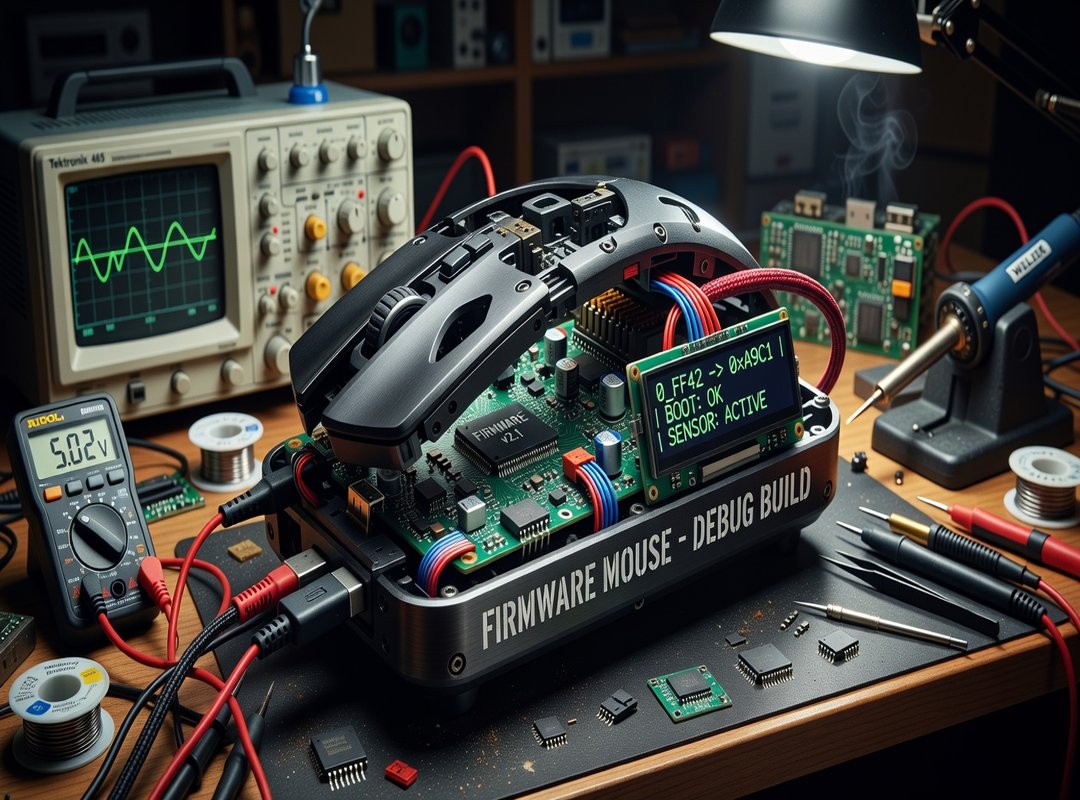
I bought a Razer keyboard in 2018. It worked fine. Until Synapse 2.0 servers shut down.
Poof. No profiles. No macros.
Just a dumb slab of plastic.
Logitech G HUB still updates my ten-year-old G502. Razer didn’t. That’s not luck.
That’s firmware policy.
Space lock-in isn’t theoretical. It’s your key remaps vanishing after a Windows update. It’s no SDK, so you can’t build your own toggle for Discord mute.
It’s being told “your device is unsupported” while it’s still charging.
Three brands with open firmware? Glorious, Varmilo, QMK-supported devices (like the Ducky One 3). Two that need cloud to blink?
SteelSeries (GG app required for basic RGB), Corsair (iCUE locks out local config).
Audit before you buy:
Check GitHub for community firmware forks. See if profiles save locally. Not just in the cloud.
Try switching them offline during your return window.
A popular RGB headset bricked itself mid-update last year. Users rescued it using open-source tools like qmk-cli. Not Razer’s tool.
Theirs was gone.
You’re not buying hardware. You’re buying a lease agreement with someone else’s server.
And yes (that) includes the Online Gaming Tportstick. Check its firmware repo before you plug it in.
Buy Now or Wait: Your Gaming Gear Reality Check
I stopped buying on hype. Too many times I’ve paid full price for “future-proof” gear that felt outdated before the box was recycled.
USB4 is real. Thunderbolt 4 and 5 are merging audio, video, and data into one cable. If your headset or dock doesn’t support it yet?
You’ll hit bottlenecks fast.
AI haptics sound cool (until) you try them in a fast-paced shooter and feel lag instead of feedback. (Spoiler: most do.)
Cross-brand macro protocols? Still theoretical. Don’t trust vendor promises about “universal macros” unless you’ve seen it work across Logitech, Razer, and Keychron in the same session.
Buy wired ultra-low-latency headsets now. They’re stable. They’re predictable.
Wireless still drops frames mid-raid.
Get hot-swappable keyboards with QMK/VIA support. Not “maybe later.” Flashing custom firmware today means surviving tomorrow’s layout shifts.
Skip AR controllers for now. Latency kills immersion. Same for fully wireless VR peripherals (battery) life and sync aren’t solved.
Avoid adaptive monitors with built-in hubs. They’re expensive and underused. Most gamers just want clean HDMI and USB-C passthrough.
Future-proofing isn’t about specs. It’s about modular firmware, physical DIP switches, and documented APIs (even) if you never touch them.
Before clicking buy, ask: Does it work offline? Can I flash custom firmware? Is the SDK public?
And if you’re tweaking latency-sensitive setups, check the Special settings tportstick guide. It cuts through the noise.
That’s where the Online Gaming Tportstick actually earns its keep.
Your Next Match Starts Here
I’ve seen too many gamers drop cash on flashy gear that does nothing for actual play.
You’re tired of paying for specs that look good on paper but fail when it counts.
Wasted money. Frustration. That lag spike right before the clutch.
This isn’t about more gear. It’s about better gear (the) kind that fixes what’s actually breaking your flow.
Prioritize latency you can measure. Firmware you can verify. Utility that matches your real games.
Not marketing fluff. Not “gaming-grade” nonsense.
Your bottleneck is real. Voice cutting out. Fingers cramping.
Aim drifting.
Pick one. Just one. Then use the system from Section 3 to fix it.
Online Gaming Tportstick solves exactly that (no) guesswork, no fluff.
We’re the top-rated accessory tool for players who refuse to lose to their own gear.
Open Section 3 now. Apply it. Play better tonight.
 Ask Alberton Clifferson how they got into player strategy guides and you'll probably get a longer answer than you expected. The short version: Alberton started doing it, got genuinely hooked, and at some point realized they had accumulated enough hard-won knowledge that it would be a waste not to share it. So they started writing.
What makes Alberton worth reading is that they skips the obvious stuff. Nobody needs another surface-level take on Player Strategy Guides, Esports Training Insights, Comprehensive Game Tutorials. What readers actually want is the nuance — the part that only becomes clear after you've made a few mistakes and figured out why. That's the territory Alberton operates in. The writing is direct, occasionally blunt, and always built around what's actually true rather than what sounds good in an article. They has little patience for filler, which means they's pieces tend to be denser with real information than the average post on the same subject.
Alberton doesn't write to impress anyone. They writes because they has things to say that they genuinely thinks people should hear. That motivation — basic as it sounds — produces something noticeably different from content written for clicks or word count. Readers pick up on it. The comments on Alberton's work tend to reflect that.
Ask Alberton Clifferson how they got into player strategy guides and you'll probably get a longer answer than you expected. The short version: Alberton started doing it, got genuinely hooked, and at some point realized they had accumulated enough hard-won knowledge that it would be a waste not to share it. So they started writing.
What makes Alberton worth reading is that they skips the obvious stuff. Nobody needs another surface-level take on Player Strategy Guides, Esports Training Insights, Comprehensive Game Tutorials. What readers actually want is the nuance — the part that only becomes clear after you've made a few mistakes and figured out why. That's the territory Alberton operates in. The writing is direct, occasionally blunt, and always built around what's actually true rather than what sounds good in an article. They has little patience for filler, which means they's pieces tend to be denser with real information than the average post on the same subject.
Alberton doesn't write to impress anyone. They writes because they has things to say that they genuinely thinks people should hear. That motivation — basic as it sounds — produces something noticeably different from content written for clicks or word count. Readers pick up on it. The comments on Alberton's work tend to reflect that.