
I remember standing in front of a Pac-Man cabinet at twelve, dropping a quarter, and knowing exactly what would happen next.
No tutorials. No 45-minute cutscenes. Just you, the joystick, and immediate feedback.
Now I open Steam and stare at a game with 127 hours of playtime logged (and) zero idea where to even start.
That’s not fun. That’s homework.
So I started asking players: what does feel like that arcade hit?
Turns out it’s First Person Online Hstatsarcade.
I’ve watched gaming evolve from coin-op cabinets to cloud saves to live-service hellscapes.
This isn’t nostalgia bait. It’s a real shift happening right now.
In this guide, I’ll define what makes a game part of this genre, why it works when so much else feels exhausting, and how to spot the real ones (not) the knockoffs dressed up with pixel fonts.
You’ll walk away knowing exactly what to play next.
First Person Online Gaming Arcade: What It Really Is
A First Person Online Gaming Arcade is three things at once. Not a genre. Not a platform.
A specific kind of experience.
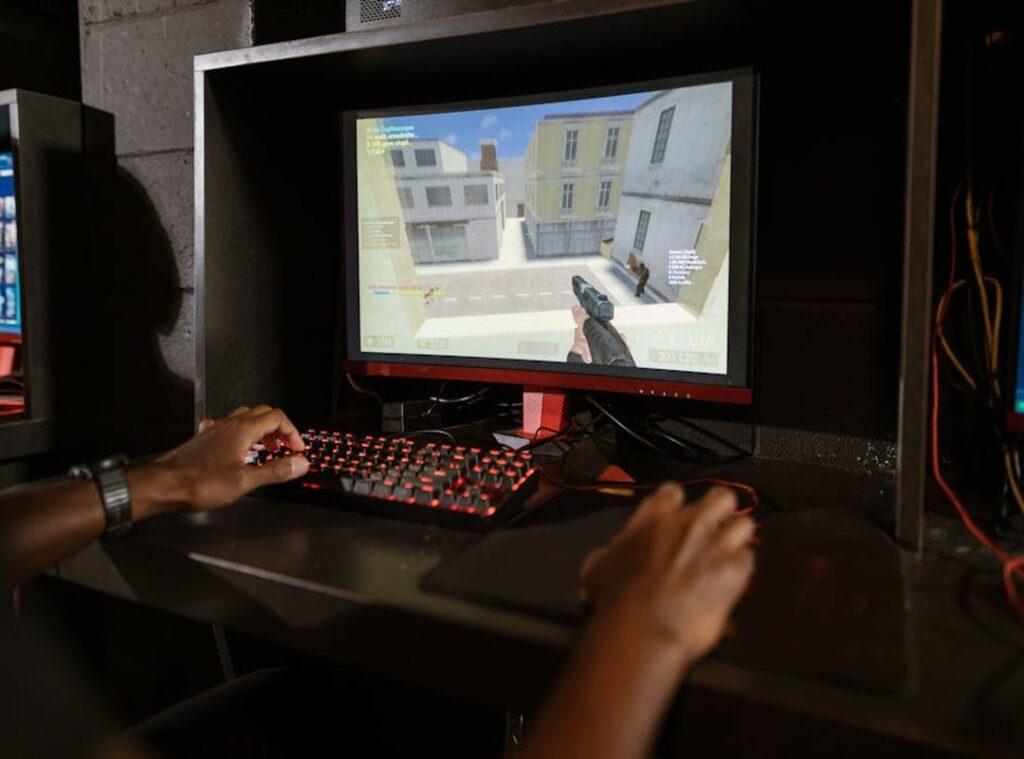
First: First Person. You see what the character sees. No side-scrolling.
No top-down map. Just your eyes, a gun, and whatever’s in front of you. That changes everything.
Classic arcades gave you control (but) distance. You watched Pac-Man turn corners. Here?
You are the corner-turner. (And yes, it makes motion sickness real.)
Second: Online Gaming. This isn’t about coins and high-score initials on a CRT. It’s about jumping into a match with someone in Tokyo while your cousin watches from Denver.
Leaderboards update live. Voice chat crackles. You lose, you laugh, you queue again.
All in under 90 seconds.
Third: Arcade. Short sessions. No 45-minute cutscenes.
No lore dumps before round one. You pick a game. You play.
You chase points. You quit. You come back tomorrow.
That’s the rhythm. That’s the point.
It’s not about story depth. It’s about reflexes, repetition, and that tiny rush when your name climbs the global list.
Some people call this “casual.” I call it focused. You don’t need 20 hours to feel like you’ve earned something.
This guide learn more breaks down how Hstatsarcade builds exactly that kind of space (fast,) social, first-person, and built for real human attention spans.
I’ve tried versions that overcomplicate it. Too many menus. Too much setup.
Too much “progression” between rounds. It kills the arcade feeling.
Hstatsarcade doesn’t do that. It starts you in the action. Every time.
Does that mean it’s shallow? No. It means it respects your time.
You want immersion? First person gives it. You want competition?
Online delivers it. You want to jump in and out without guilt? That’s the arcade part.
The Comeback Kids: Why Arcade Games Are Back (and Better)
I stopped playing CyberDoom 9 after two hours of loading screens and skill-tree tutorials. You did too.
Gaming fatigue is real. Not the kind where you’re tired (the) kind where your brain says nope before you even click play.
That’s why I’m back in the arcade. Not a physical one (though I miss the smell of popcorn and burnt wiring). I mean the First Person Online Hstatsarcade.
It’s fast. It’s dumb. It’s fun.
No lore dumps. No 47-hour campaign maps. Just jump in, shoot something, laugh when you die, and try again.
Remember arcades? Not the nostalgia-bait merch shops. The real ones with sticky floors and strangers yelling at each other over Pac-Man.
That energy never died. It just moved.
Now it lives in places like Roblox lobbies and VRChat hangouts. Digital third places. Where you don’t need to “build a character” (you) just show up as you are (or as your slightly unhinged avatar).
Nostalgia pulls you in. But modern tech keeps you there. 120fps. Cross-platform matchmaking.
Voice chat that actually works. None of that “press F to pay respects” nonsense.
I played Space Racer 2024 last night. Same loop as the 1983 version. Same dopamine hit.
Just smoother. Faster. Sharper.
And yes. It’s social. My cousin from Ohio and my neighbor’s kid joined the same lobby.
We didn’t talk about our jobs or the weather. We yelled about who stole the jetpack.
You can read more about this in Multiplayer Guide.
If you’re wondering how to get into multiplayer without the headache, this guide walks you through it step by step. No jargon. No fluff.
Some people call it retro. I call it relief.
You ever finish a session and realize you smiled the whole time?
Yeah. Me too.
That’s not accidental. It’s designed that way.
Arcades aren’t coming back.
They never left.
What Makes an Arcade Feel Alive

A great digital arcade isn’t about how shiny it looks. It’s about whether you want to stay.
I’ve walked into dozens of so-called arcades that felt like waiting rooms. Empty. Quiet.
No reason to linger. Don’t waste your time there.
Look for variety of games first. Not just “a bunch of shooters.” I mean different kinds of first-person experiences. A futuristic shooting gallery where targets move in 3D space.
A parkour challenge with real momentum and wall-runs. A puzzle room where physics matters. A wave-based survival mode where every round changes the rules.
If all the games feel like the same engine with a new skin (walk) away.
Leaderboards aren’t decoration. They’re oxygen. That drive to beat your own score?
That itch to see your name above someone else’s? That’s what keeps people coming back.
Cosmetic rewards help. But only if they’re earned, not bought. A rare helmet for clearing the puzzle room on hard mode?
Yes. A $20 “victory emote” for logging in? No.
The social hub has to work. Not just a lobby with avatars lined up like mannequins. You need voice chat that doesn’t crackle.
A way to jump into a friend’s game with one click. A feed showing what your crew just unlocked.
If you’re clicking through five menus to say “hey” to someone (it’s) broken.
The best arcades make hanging out feel effortless. Like dropping into your friend’s basement with a bag of chips and three controllers.
That’s why I still use First Person Online Hstatsarcade when I want something tight, responsive, and built for real players (not) analytics dashboards.
And if you’re on mobile? The Hstatsarcade Mobile From version nails the same energy. No compromises.
Just fast matchmaking and clean controls.
No fluff. No filler. Just play.
Your Next Game Starts Now
I know what it’s like to open a game and wonder: Is this going to eat my night? Or just leave me alone?
You want fun that clicks right away. You want people (not) bots or ghosts (but) real voices, real reactions. You don’t want to study a 40-page manual before your first laugh.
That’s why First Person Online Hstatsarcade works.
It’s not another grindfest. It’s not another lonely lobby full of silent avatars. It’s arcade energy (fast,) loud, social (wrapped) in first-person action.
You’ve already spent too long scrolling past games that promise connection but deliver confusion.
So stop scrolling. Start searching.
Open Steam or the Epic Games Store right now. Type “Arcade” or “Minigames” or “Social”. Hit enter.
You’ll see titles built for exactly this: quick matches, zero setup, real-time banter.
Most of them are free or under five bucks. Many have 95%+ positive reviews from players just like you.
This isn’t the future of gaming. It’s happening today.
And it’s ready for you.
Your turn.
Go find your first match.
 Ask Alberton Clifferson how they got into player strategy guides and you'll probably get a longer answer than you expected. The short version: Alberton started doing it, got genuinely hooked, and at some point realized they had accumulated enough hard-won knowledge that it would be a waste not to share it. So they started writing.
What makes Alberton worth reading is that they skips the obvious stuff. Nobody needs another surface-level take on Player Strategy Guides, Esports Training Insights, Comprehensive Game Tutorials. What readers actually want is the nuance — the part that only becomes clear after you've made a few mistakes and figured out why. That's the territory Alberton operates in. The writing is direct, occasionally blunt, and always built around what's actually true rather than what sounds good in an article. They has little patience for filler, which means they's pieces tend to be denser with real information than the average post on the same subject.
Alberton doesn't write to impress anyone. They writes because they has things to say that they genuinely thinks people should hear. That motivation — basic as it sounds — produces something noticeably different from content written for clicks or word count. Readers pick up on it. The comments on Alberton's work tend to reflect that.
Ask Alberton Clifferson how they got into player strategy guides and you'll probably get a longer answer than you expected. The short version: Alberton started doing it, got genuinely hooked, and at some point realized they had accumulated enough hard-won knowledge that it would be a waste not to share it. So they started writing.
What makes Alberton worth reading is that they skips the obvious stuff. Nobody needs another surface-level take on Player Strategy Guides, Esports Training Insights, Comprehensive Game Tutorials. What readers actually want is the nuance — the part that only becomes clear after you've made a few mistakes and figured out why. That's the territory Alberton operates in. The writing is direct, occasionally blunt, and always built around what's actually true rather than what sounds good in an article. They has little patience for filler, which means they's pieces tend to be denser with real information than the average post on the same subject.
Alberton doesn't write to impress anyone. They writes because they has things to say that they genuinely thinks people should hear. That motivation — basic as it sounds — produces something noticeably different from content written for clicks or word count. Readers pick up on it. The comments on Alberton's work tend to reflect that.